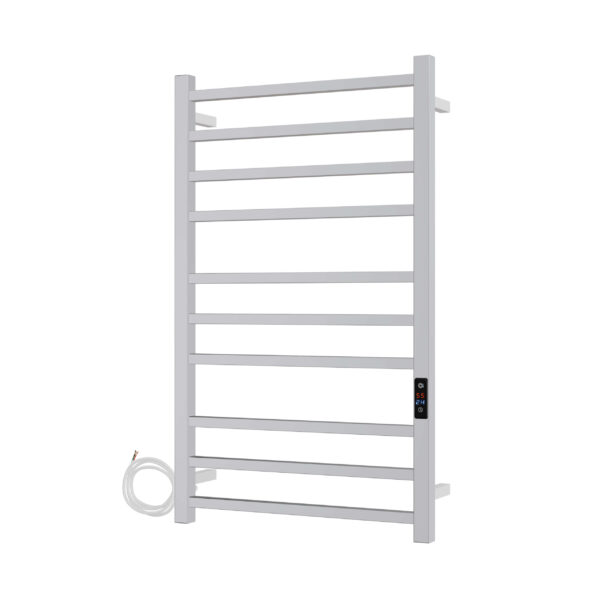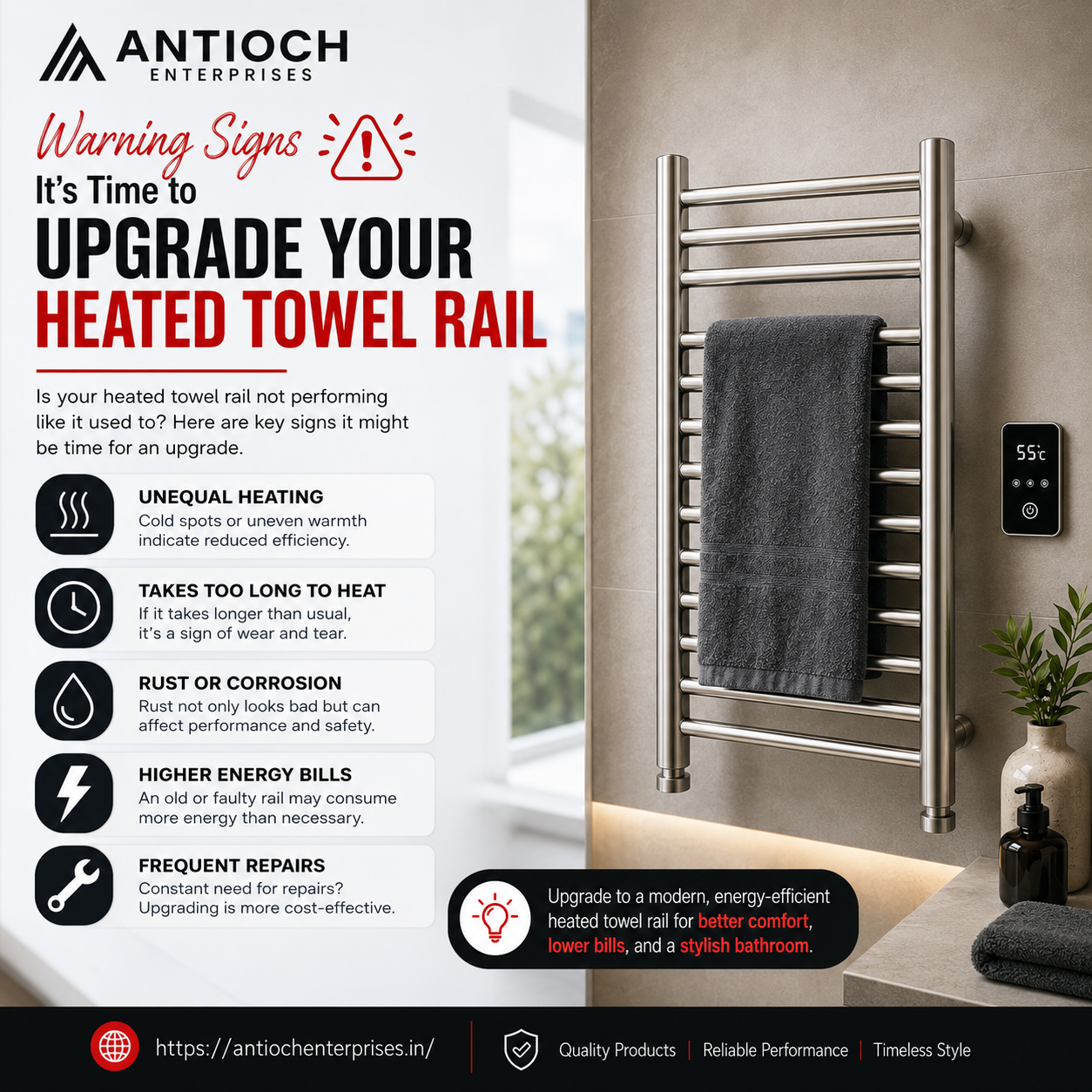
You walk into your bathroom on a cold winter morning, reach for your towel, and… it’s cold. Not warm, not even lukewarm — just cold. If this has been happening more often lately, your Heated Towel Rail might be quietly asking for retirement. Most homeowners don’t think twice about their towel warmer until it stops working altogether, but the truth is, appliances rarely fail overnight. They give small, easy-to-miss signals long before they break down completely.
A heated towel rail isn’t just a luxury add-on anymore — it’s become a everyday comfort many Indian households rely on, especially during monsoons and winters when towels take forever to dry naturally. But like any electrical fixture, it has a lifespan. Knowing when to upgrade heated towel rail systems can save you money on electricity bills, prevent safety hazards, and bring back that spa-like warmth you fell in love with in the first place.
In this blog, we’ll walk you through five clear warning signs that tell you it’s time to stop patching things up and finally replace old heated towel rail units with something newer, safer, and more efficient.
-
It’s Taking Longer to Heat Up Than Before
Do you remember how quickly your towel rail used to warm up when you first installed it? If it now takes double or triple the time to reach the same temperature, that’s not just annoying — it’s inefficient. Heating elements degrade over time, and when they do, they consume more electricity while delivering less warmth. This is one of the most common signs to upgrade heated towel rail systems, yet it’s often ignored because people assume it’s just “getting old” rather than realizing it’s actively costing them money every single month.
-
Uneven Heating Across the Rail
Run your hand along the bars of your towel rail. If some sections feel warm while others are barely lukewarm or completely cold, there’s likely an internal fault developing. Uneven heating usually points to a failing heating element or a wiring issue inside the unit. This isn’t something you can fix with a simple repair — it’s a strong indicator that your heated towel rail has reached the end of its functional life and needs a full replacement rather than a patch job.
-
Rising Electricity Bills Without Explanation
Have you noticed your power bills creeping up even though your usage habits haven’t changed much? Old towel rails, especially ones without smart thermostats or timers, tend to draw more power as their components wear down. They essentially “work harder” to produce the same amount of heat, silently draining your wallet. Newer models come with energy-efficient technology, programmable timers, and better insulation, making the switch not just a comfort upgrade but a genuinely smart financial decision.
-
Visible Rust, Corrosion, or Peeling Finish
Bathrooms are humid environments, and over the years, that moisture takes a toll on metal fixtures. If you spot rust spots, flaking chrome, or a finish that’s starting to peel or discolor, this isn’t just a cosmetic issue — it can be a genuine safety concern. Corrosion can affect the electrical components hidden beneath the surface, increasing the risk of short circuits. Once you start noticing these physical signs, it’s usually one of the clearest indicators that it’s time to upgrade heated towel rail fixtures before a minor issue turns into a bigger, costlier problem.
-
Strange Noises, Smells, or Tripped Switches
This is the sign nobody should ignore. Buzzing sounds, a faint burning smell, or your circuit breaker tripping whenever the towel rail is switched on are all red flags pointing toward an electrical fault. Continuing to use a unit showing these symptoms isn’t just inconvenient — it’s genuinely risky for your home and family. If you’ve experienced even one of these warning signs, don’t wait for a bigger failure. This is the most urgent of all the signs to upgrade heated towel rail systems, and it should be addressed immediately by switching to a newer, certified unit.
Why Upgrading Makes More Sense Than Repairing
It’s tempting to call an electrician for a quick fix every time something goes wrong, but repeated repairs add up — both in cost and in the hassle of scheduling visits. Modern towel rails are designed with better insulation, faster heating cycles, and safer electrical components, meaning fewer breakdowns and lower running costs over time. Choosing to replace old heated towel rail units rather than repeatedly patching them is almost always the more practical long-term choice, both financially and in terms of everyday convenience.
If you’re exploring options for a reliable and stylish replacement Antioch Enterprises offers a well-regarded range of towel warmers designed for Indian bathrooms, built with a focus on durability, energy efficiency, and modern aesthetics that fit seamlessly into both compact and luxury bathroom spaces.
Making the Switch: What to Look for in a New Unit
When you’re ready to upgrade, don’t just replace like-for-like. Look for units with programmable timers, energy-efficient heating elements, rust-resistant finishes, and safety certifications. A slightly higher upfront investment in a quality unit often pays for itself through lower electricity consumption and fewer repair calls down the line. Think of it less as an expense and more as an investment in everyday comfort that you’ll appreciate every single morning, especially during the colder months.
Pricing Guide — What to Expect in 2026
| Type | Size | Price Range |
| Vertical Single Bar (Round) | 800mm–1200mm | ₹2,599 – ₹3,799 |
| Vertical Single Bar (Square) | 800mm–1200mm | ₹2,799 – ₹3,999 |
| Horizontal Single Bar (Round) | 450mm–850mm | ₹1,099 – ₹1,699 |
| Horizontal Single Bar (Square) | 450mm–850mm | ₹1,599 – ₹2,299 |
| Miter Joint Ladder Rail | 600×400mm | ₹6,100 – ₹8,600 |
| Miter Joint Ladder Rail | 800×500mm | ₹7,300 – ₹12,100 |
| Rail with Shelf | 600×500mm | ₹8,600 – ₹14,200 |
| Rail with Shelf | 900×500mm | ₹9,400 – ₹15,600 |
Shop Heated Towel Rails Now →
Final Thoughts
Your bathroom should be a place of comfort, not a source of frustration. If your towel rail is showing any of these five warning signs — slow heating, uneven warmth, rising bills, visible corrosion, or strange electrical symptoms — it’s time to stop ignoring the problem and start looking at newer, safer alternatives. A timely upgrade doesn’t just restore comfort; it protects your home, your budget, and your peace of mind for years to come.
Frequently Asked Questions
- How long does a heated towel rail typically last?
Most heated towel rails last between 8 to 12 years, depending on usage, water quality, and build quality. Regular maintenance can help extend this lifespan, but once you notice consistent performance issues, replacement is usually more cost-effective than ongoing repairs.
- Is it cheaper to repair or replace a heated towel rail?
For minor issues like a faulty switch, repair can work. But for problems involving the heating element, wiring, or corrosion, replacement is usually cheaper in the long run since repeated repairs on an aging unit rarely offer lasting solutions.
- Can an old heated towel rail be a safety hazard?
Yes. Signs like burning smells, buzzing noises, or frequently tripped circuit breakers indicate potential electrical faults that can pose fire or shock risks. Any of these symptoms should be treated as an urgent signal to stop using the unit and arrange a replacement immediately.
Explore related articles: https://antiochenterprises.in/heated-towel-rail/
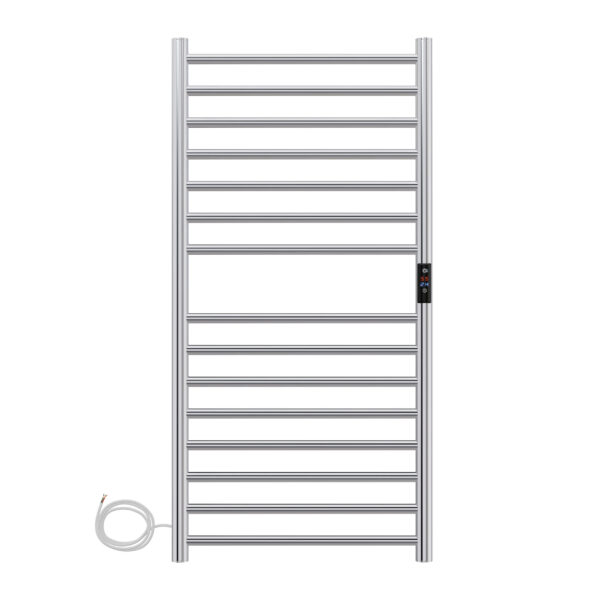

Premium SS Round Heated Towel Rail with Temperature & Timer Control

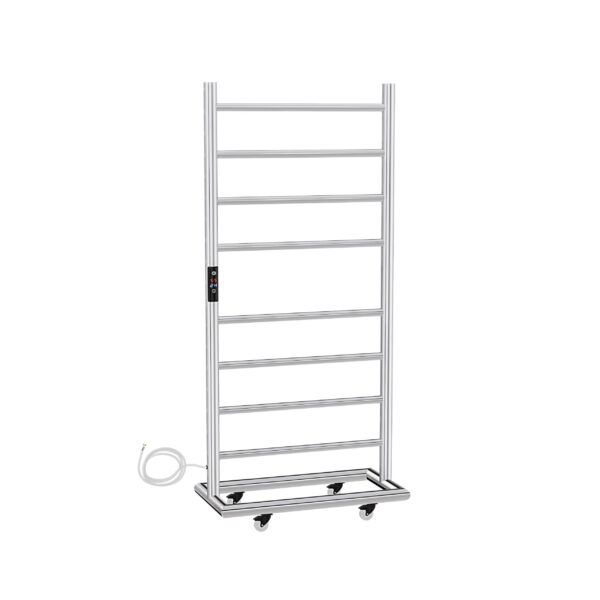
SS Round Heated Towel Rail –Free Standing 1100mm x 500mm with Temperature & Timer Control


SS Square Heated Towel Rail – 520mm x 535mm with Temperature & Timer Control