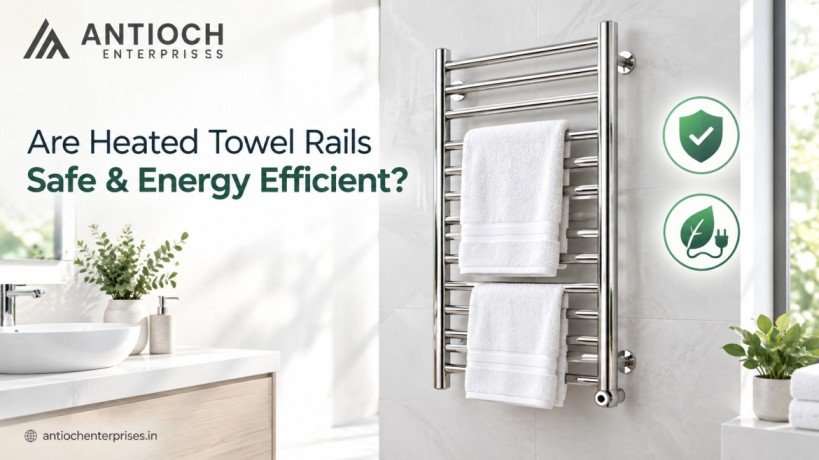
Are Heated Towel Rails Safe & Energy Efficient? (2026 Guide)
There’s nothing quite like wrapping yourself in a warm, dry towel straight out of the shower on a cold morning. But before you install one in your own bathroom, it’s fair to ask the two questions everyone eventually asks: is it safe to run near water, and will it quietly inflate your electricity bill? This guide breaks down heated towel rail safety and running costs in plain language, so you can make the call with real numbers instead of guesswork.
What Exactly Is a Heated Towel Rail?
More Than Just a Fancy Towel Bar
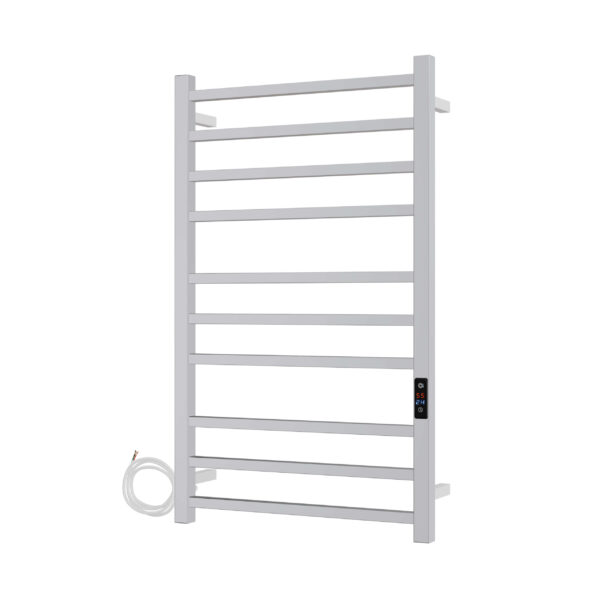
A heated towel rail is an electrically powered fixture that gently warms its metal bars, drying towels faster and keeping them warm to the touch. Most modern units run on low wattage, use sealed heating elements, and are built specifically for bathroom conditions. Understanding how the internal heating works is the first step to trusting electric towel warmer safety, because the design itself is what keeps water and electricity safely apart.
Is Heated Towel Rail Safe for Bathroom Use?
The honest answer to is heated towel rail safe for bathroom use depends entirely on build quality and installation. Genuine units are sealed against moisture, rated for bathroom zones, and wired through a residual current device (RCD) for extra protection. Problems almost always trace back to uncertified, cheaply made products or poor wiring — not the technology itself. A rail from a reputable manufacturer, installed by a qualified electrician, poses no more risk than any other bathroom appliance.
What Makes a Rail Genuinely Bathroom-Ready
Look for a unit with a sealed IP-rated body, a low operating voltage, and a thermal cutoff that switches the element off if it overheats. These aren’t optional extras — they’re the baseline features that separate a trustworthy rail from a risky one. If a product doesn’t list any of these on its spec sheet, that’s a red flag worth taking seriously.
Breaking Down Heated Towel Rail Safety Features
The Small Details That Actually Matter
True heated towel rail safety comes down to a handful of engineering choices that most buyers never think to check:
- IP44 or higher water-resistance rating, so splashes and steam don’t reach live components
- Automatic thermal cutoff, which shuts the unit down before it overheats
- Low surface temperature design, usually capped around 60–70°C to prevent burns
- RCD/ELCB-compatible wiring, adding a second layer of shock protection
- CE, RoHS, or ISI certification, confirming the unit passed independent safety testing
Why Certification Isn’t Just a Sticker
A certification mark means the product has been tested against recognized electrical and thermal safety standards, not just approved by the seller’s own claims. Before buying, it’s worth asking the supplier directly for test certificates rather than taking a product photo at face value.
How Much Energy Does a Heated Towel Rail Actually Use?
Running Costs Lower Than You’d Expect
One of the biggest myths is that a heated towel rail runs up huge bills. In reality, heated towel rail energy consumption typically sits between 40W and 150W depending on size — roughly the same draw as a couple of LED bulbs left on. Left running for a few hours a day, this translates into a modest addition to your monthly electricity bill, not a dramatic spike.
Doing the Math on Daily Use
A 60W rail running for 4 hours a day consumes about 0.24 units (kWh) of electricity daily. Multiply that across a month, and you’re looking at roughly 7.2 kWh — a fraction of what a water heater or space heater uses over the same period. Most owners find the comfort trade-off well worth this small cost.
Heated Towel Rail Running Cost in India (and Beyond)
Numbers That Won’t Surprise Your Wallet
At average Indian electricity tariffs, the heated towel rail running cost India for a mid-sized 60–80W unit typically works out to somewhere between ₹150 and ₹350 per month for regular daily use. That’s often less than a single takeaway meal, for the daily luxury of a warm towel and a drier, mold-resistant bathroom.
How This Compares Internationally
Buyers researching towel rails in colder markets, including Canada, generally see similar low running costs relative to other heating appliances, since the wattage stays modest regardless of climate. The bigger cost driver isn’t location — it’s how many hours a day the rail stays switched on and whether it has a timer or thermostat to avoid unnecessary use.
Are Heated Towel Rails Energy Efficient Compared to Other Heating?
Small Appliance, Smart Efficiency
When placed next to a portable space heater or an always-on bathroom exhaust heater, an energy efficient towel rail wins comfortably on power draw. Space heaters commonly pull 1000W–2000W, while even a generously sized towel rail rarely exceeds 150–200W. You get consistent, low-level warmth exactly where you need it — on the towel and the surrounding air — without heating an entire room.
Where the Real Savings Come From
Rails with built-in timers or thermostatic controls cut consumption further by switching off automatically once towels are dry or a set temperature is reached. This small feature alone can reduce energy use by a noticeable margin over a year, making an already efficient appliance even leaner to run.
Tips to Keep Your Heated Towel Rail Safe and Efficient
Simple Habits That Extend the Life of Your Rail
A few practical habits go a long way toward keeping both safety and efficiency intact:
- Avoid draping thick, non-breathable fabrics over the entire rail, which can trap heat
- Have the unit installed by a licensed electrician, especially near wet zones
- Use a timer or smart plug to avoid leaving it on overnight unnecessarily
- Wipe down the bars periodically to prevent dust buildup on the heating element
- Check for visible certification marks before purchase, not after installation
Choosing a Safe, Energy-Efficient Heated Towel Rail
What to Look for Before You Buy
Not every rail on the market meets the same standard, so it pays to compare specifications rather than just price tags. Stainless steel construction, a documented IP rating, and a manufacturer that’s transparent about wattage and certification are the strongest indicators of a reliable purchase. Suppliers like Antioch Enterprises, who manufacture and export heated towel rails with a focus on stainless steel build quality and energy-conscious heating technology, are a useful benchmark for what a properly engineered rail should offer.
The Bottom Line
Heated towel rails are, on the whole, a safe and energy-efficient addition to a modern bathroom — provided the unit is certified, correctly installed, and used sensibly. The running costs are modest, the safety risks are manageable with the right features, and the daily comfort payoff is hard to beat.
Frequently Asked Questions
1. Are heated towel rails safe to leave on all day?
It’s generally not necessary or recommended. Most units are designed for intermittent use, and a timer or thermostat is a safer, more energy-efficient way to keep towels warm without round-the-clock power draw.
2. Do heated towel rails use a lot of electricity?
No — most models draw between 40W and 150W, which is comparable to a couple of light bulbs, making them one of the more economical bathroom appliances to run.
3. Can heated towel rails cause a fire?
Certified units with thermal cutoffs and proper wiring carry very low fire risk. Issues typically arise from uncertified products, damaged wiring, or covering the rail entirely with thick fabric that traps heat.
4. Are heated towel rails worth it in Canada’s colder climate?
Yes — in colder regions like Canada, a heated towel rail adds year-round comfort and helps dry towels faster in humid bathrooms, all while using far less power than a space heater or extra room heating.
5. What is the running cost of a heated towel rail per month?
For a typical 60–80W unit used a few hours daily, monthly running costs are usually modest — often less than the cost of a couple of coffees, depending on local electricity rates.
6. Are heated towel rails safe in bathrooms with wet floors?
Yes, provided the unit has an appropriate IP water-resistance rating and is installed by a qualified electrician following local bathroom zoning regulations for electrical fixtures.
7. Which is more energy efficient — a heated towel rail or a space heater?
A heated towel rail is significantly more energy efficient, since it targets a small area with low wattage, whereas a space heater consumes far more power to heat an entire room.
Ready to upgrade your bathroom with a rail that’s built for real safety and efficiency?
Explore certified, stainless steel heated towel rails designed for everyday comfort and browse the full range today.
Explore Related Articles:-
Smart Heated Towel Rails 2026: App & Voice-Controlled Bathroom Heating
Enhance Your Bathroom with Premium Designer Towel Warmers
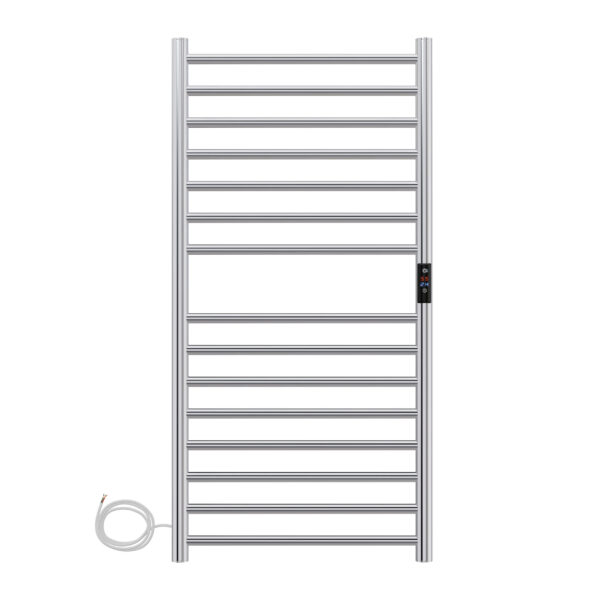

Premium SS Round Heated Towel Rail with Temperature & Timer Control
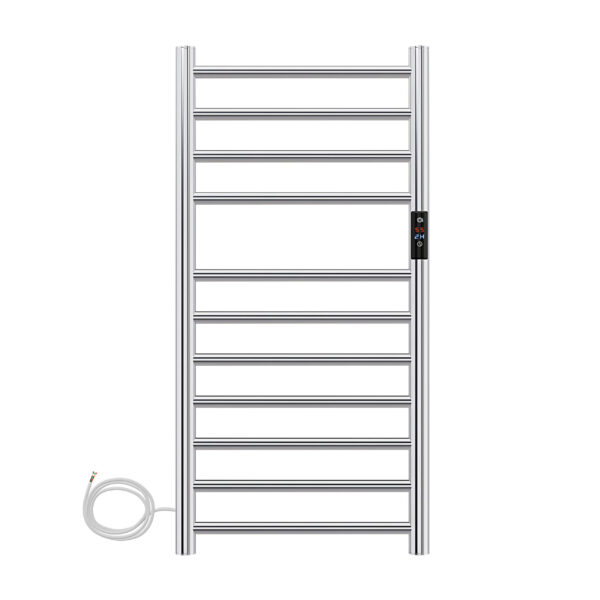

SS Round Heated Towel Rail – 800mm x 400mm with Temperature & Timer Control


SS Square Heated Towel Rail – 520mm x 535mm with Temperature & Timer Control