
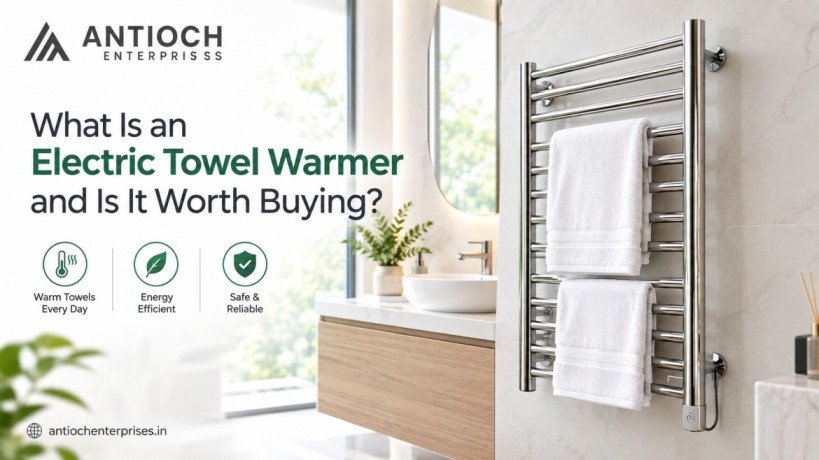
Electric Towel Warmers Explained: Are They Worth the Cost?
That first cold, damp towel after a shower? There’s actually a fix for that.
Picture this: it’s a freezing morning, you step out of a hot shower, and the only thing waiting for you is a cold, slightly damp towel. It’s a small annoyance, but it happens every single day. An Electric Towel Warmer solves that exact problem, turning an ordinary bathroom habit into something genuinely comfortable. But is it actually worth spending money on, or is it just another gadget that sounds nice in theory? Let’s break it down honestly.
What Is an Electric Towel Warmer, Exactly?
A simple idea with a surprisingly big impact on your daily routine.
An electric towel warmer is basically a heated rack or rail that plugs into a standard power outlet and warms itself up so your towels stay dry, cozy, and ready whenever you need them. Unlike old-school radiator-style units that need plumbing work, electric versions are simple to install and usually just need an outlet nearby. Most models are made from stainless steel or chrome-plated finishes, so they double as a stylish accessory in the bathroom, not just a functional device.
The heating element inside stays at a low, safe temperature, which means it can run for hours without using much power at all. That’s a huge part of why this small upgrade has become so popular in modern homes across Canada, the US, and beyond.
How Does It Actually Keep You Warm and Toasty?
The science behind the warmth is simpler than you’d think.
Inside every electric towel rail, there’s a heating cable or element that runs through the bars. Once plugged in, the metal bars gradually heat up, and the towel draped over them absorbs that warmth evenly. Some models come with built-in timers or thermostats, so you can set them to turn on right before your morning shower and switch off automatically afterward.
This isn’t just about comfort, either. The gentle, constant heat also helps towels dry faster between uses, which cuts down on that musty smell that damp towels tend to develop in humid bathrooms.
Top Electric Towel Warmer Benefits You’ll Actually Notice
Here’s what changes once you start using one every single day.
The Electric Towel Warmer Benefits go beyond just having a warm towel. Once people install one, most say they can’t imagine going back to a regular towel bar. Here’s what actually stands out:
- Instant comfort — no more shivering while reaching for a cold, damp towel after a hot shower.
- Faster drying — towels dry within a few hours instead of sitting damp all day, which means less washing and less wear.
- Better hygiene — dry towels don’t hold onto bacteria, mildew, or that stale odor that damp fabric develops.
- Low running cost — most units use roughly the same power as a light bulb, so the impact on your electricity bill is minimal.
- Extra bathroom warmth — it can take the chill off a small bathroom without needing to crank up the central heating.
- Longer-lasting towels — less mildew and mold exposure means your towels stay softer and last longer overall.
Heated Towel Rack vs Regular Towel Bar — What’s the Real Difference?
It’s not just about looks — the difference shows up in daily use.
A regular towel bar is just a static piece of metal — it holds your towel and does nothing else. A Heated Towel Rack, on the other hand, is an active fixture that actually improves how your towel feels and how quickly it dries. Where a standard bar leaves your towel exposed to whatever humidity is in the room, a heated version fights against that moisture directly.
Style-wise, they’re often nearly identical, so upgrading doesn’t mean sacrificing your bathroom’s design. Many people are surprised to learn that installation is just as easy, especially with wall-mounted plug-in models that don’t require any rewiring.
Electric Towel Rail Styles: Which One Fits Your Bathroom?
From compact single bars to full ladder-style units, there’s a shape for every space.
Not every bathroom has the same layout, which is why electric towel rail designs come in so many shapes and sizes. You’ll find slim vertical single-bar units for tight spaces, wider horizontal bars for family bathrooms, and ladder-style rails that hold multiple towels at once. Companies like Antioch Enterprises manufacture a wide range of stainless-steel options — round, square, and shelf-integrated designs — so homeowners aren’t stuck compromising on either function or appearance.
Finish matters too. Chrome gives a bright, reflective look, while brushed steel or matte black finishes fit more contemporary bathrooms. Picking the right shape usually comes down to available wall space and how many towels you actually need warmed at once.
Is It Worth the Investment? Breaking Down Cost vs Value
Let’s talk numbers, because that’s usually what settles the decision.
Most electric towel warmers cost somewhere between a modest one-time purchase and a mid-range home accessory price, depending on size and finish. Running costs are genuinely low — many units consume under 100 watts, which translates to just a few dollars a month even with regular daily use. When you compare that small ongoing cost against the everyday comfort, faster-drying towels, and reduced mildew smell, the value case becomes pretty clear.
Brands such as Antioch Enterprises also offer catalogues with multiple size and price tiers, which makes it easier to find something that fits both your bathroom and your budget without overspending on features you won’t use.
Who Should (and Shouldn’t) Buy One?
Not every home needs one — but for most, it’s a worthwhile upgrade.
If you live somewhere with cold winters, deal with a consistently humid bathroom, or simply enjoy small comfort upgrades around the house, this is an easy yes. Families with kids also benefit, since dry, warm towels reduce the chance of towels sitting around damp and developing odor. On the other hand, if your bathroom already stays warm year-round and you rarely notice towel dampness as an issue, it may be a lower priority purchase for you right now.
Tips for Choosing the Right Electric Towel Warmer for Your Home
A few quick checks before you buy will save you a return hassle later.
- Measure your wall space first — vertical models suit narrow bathrooms, horizontal ones suit wider walls.
- Check the wattage to estimate running costs before committing to a larger unit.
- Look for a timer or thermostat if you want automatic on/off scheduling.
- Match the finish to your existing bathroom fixtures for a cohesive look.
- Buy from a trusted supplier, since brands like Antioch Enterprises back their products with proper warranties and customer support.
Final Verdict: Small Upgrade, Big Everyday Impact
Sometimes the smallest changes end up mattering the most.
At the end of the day, an Electric Towel Warmer isn’t a luxury reserved for fancy hotels anymore — it’s a practical, affordable upgrade that quietly improves a part of your daily routine you probably think about more than you realize. Between the comfort, the hygiene benefits, and the genuinely low running cost, it’s hard to find a strong argument against trying one.
Pricing Guide — What to Expect in 2026
| Type | Size | Price Range |
| Vertical Single Bar (Round) | 800mm–1200mm | ₹2,599 – ₹3,799 |
| Vertical Single Bar (Square) | 800mm–1200mm | ₹2,799 – ₹3,999 |
| Horizontal Single Bar (Round) | 450mm–850mm | ₹1,099 – ₹1,699 |
| Horizontal Single Bar (Square) | 450mm–850mm | ₹1,599 – ₹2,299 |
| Miter Joint Ladder Rail | 600×400mm | ₹6,100 – ₹8,600 |
| Miter Joint Ladder Rail | 800×500mm | ₹7,300 – ₹12,100 |
| Rail with Shelf | 600×500mm | ₹8,600 – ₹14,200 |
| Rail with Shelf | 900×500mm | ₹9,400 – ₹15,600 |
Frequently Asked Questions
Are electric towel warmers worth it in Canada?
Yes. In colder climates like Canada, a heated towel rail adds noticeable comfort during winter months and helps towels dry faster in humid or poorly ventilated bathrooms, making it a practical, low-cost upgrade.
How Does a Heated Towel Rail Work and Does It Use Much Electricity
Most units use between 20 and 100 watts, so running one daily typically adds only a few dollars to a monthly electricity bill — far less than most people expect.
Can you leave a heated towel rack on all the time?
Many modern models are designed for continuous, safe use thanks to low-temperature heating elements, though using a timer can help save extra energy if you prefer.
Do heated towel racks use a lot of electricity?
No — they’re one of the more energy-efficient bathroom accessories available, drawing roughly the same power as a small household appliance or light fixture.
What is the difference between electric and hydronic towel warmers?
Electric versions plug into a standard outlet and are easy to install, while hydronic models connect to your home’s hot water or central heating system and usually require professional plumbing work.
Are heated towel racks safe in a bathroom?
Yes, when installed correctly and kept away from direct water contact, they’re built to modern safety standards specifically for humid bathroom environments.
How long does it take for towels to get warm?
Most towels feel noticeably warm within 10 to 15 minutes, though full heating throughout the fabric can take up to 30 minutes depending on towel thickness.
Ready to Upgrade Your Bathroom?
A warm, dry towel might seem like a small thing — until you experience it every single morning. If you’re ready to make the switch, explore the range of stainless-steel towel rails and warmers designed for everyday comfort and lasting quality.
Browse the collection today and bring a little extra warmth into your daily routine.
Explore Related Articles:-
Electric Towel Warmer Price List India 2026 All Sizes Compared
Smart Heated Towel Rails 2026: App & Voice-Controlled Bathroom Heating


SS Round Heated Towel Rail – 1200mm x 425mm with Temperature & Timer Control
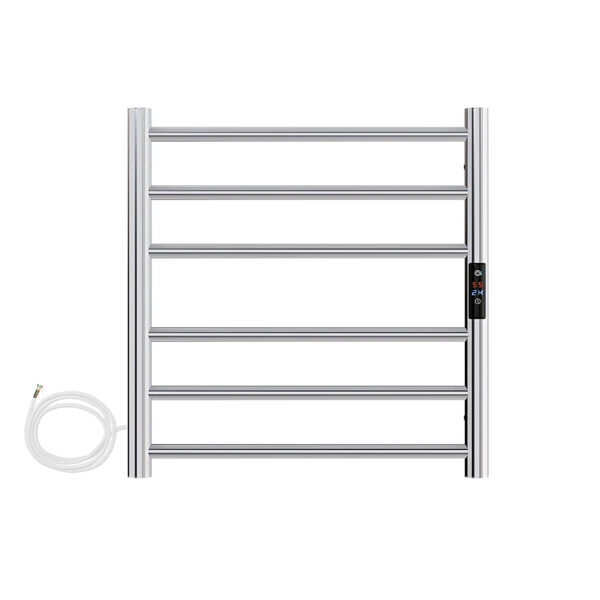
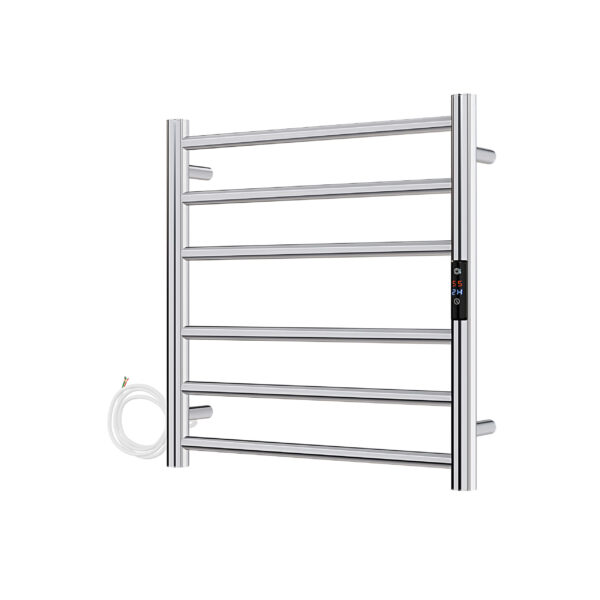
SS Round Heated Towel Rail – 620mm x 600mm with Temperature & Timer Control
