

There’s nothing quite like wrapping yourself in a warm, dry towel after a shower, especially during those long, cold Canadian winters. But before you install one in your bathroom, you’re probably asking the same question thousands of homeowner’s searches for every month: what’s the actual heated towel rail running cost? Good news modern energy efficient heated towel rails are far cheaper to operate than most people assume, and this guide breaks down the real numbers so you can decide with confidence.
What Is a Heated Towel Rail and Why Canadians Are Switching to Them
A heated towel rail is a wall-mounted or freestanding bar that gently warms your towels using electric heating elements. Instead of leaving towels damp and cold on a hook, this simple upgrade keeps them warm, dry, and fresh-smelling all day long. Across Canada, more homeowners are choosing these units for renovated bathrooms, condos, and cottages, largely because they combine comfort with surprisingly low power draw. With rising interest in smart home upgrades, an energy efficient towel warmer has become one of the most requested additions in modern bathroom design.
Heated Towel Rail Electricity Consumption: The Real Numbers
Let’s get straight to what most people actually want to know, heated towel rail electricity consumption. Most residential units use between 20 and 150 watts, depending on the size and model you choose. A standard mid-sized bar typically draws around 60 to 80 watts, which is roughly the same as a couple of LED light bulbs running together. Larger, dual-zone models built for bigger bathrooms or shared households may use closer to 150 watts. Compared to space heaters, which often pull 1,000 to 1,500 watts, a heated towel rail is a fraction of that draw, making it one of the lowest-consumption fixtures you can add to a bathroom.
Heated Towel Rail Running Cost: Daily, Monthly & Yearly Breakdown
Now let’s translate that wattage into dollars. Using an average Canadian electricity rate of around 13 to 17 cents per kilowatt-hour, here’s a simple breakdown for a typical 80-watt rail running continuously:
- Daily cost: roughly 25 to 33 cents
- Monthly cost: approximately $7.50 to $10
- Yearly cost: around $90 to $120
If you use a timer or thermostat control, which most quality models include, your heated towel rail running cost drops significantly, since the unit only heats when needed rather than running 24/7. Many households cut this figure nearly in half simply by scheduling heating for morning and evening hours.
Energy Efficient Towel Warmer vs Traditional Heaters: Which Saves More?
It’s easy to assume any heating appliance will spike your electricity bill, but towel rails are built differently than traditional space heaters. Traditional heaters warm an entire room, working against drafts, open doors, and poor insulation, which wastes a lot of energy. An energy efficient towel warmer, on the other hand, only needs to warm a small metal surface, not the whole room. This targeted heating is why towel rails use significantly less power while still delivering that cozy, spa-like warmth every time you step out of the shower.
5 Simple Ways to Reduce Your Heated Towel Rail Running Cost
If you want to squeeze even more savings out of your unit, a few small habits go a long way:
- Use a built-in timer so the rail only runs during peak usage hours, like mornings and evenings.
- Choose a thermostat-controlled model that automatically maintains a set temperature instead of running at full power constantly.
- Turn it off when you’re away for extended periods, such as vacations or long work trips.
- Insulate your bathroom walls to help retain warmth and reduce how hard the unit has to work.
- Pick the right size for your space — an oversized rail in a small bathroom wastes energy unnecessarily.
Following even two or three of these tips can meaningfully lower your heated towel rail electricity consumption over the course of a year.
Are Energy-Efficient Heated Towel Rails Worth It in Canada?
Given Canada’s cold climate, the comfort-to-cost ratio of heated towel rails is hard to beat. For less than the price of a few coffees a month, you get consistently warm, bacteria-resistant, dry towels every single day. Beyond comfort, warm towels dry faster, which helps prevent the musty smell and mildew buildup common in humid bathrooms. When you weigh the low running cost against the everyday luxury and hygiene benefits, it’s clear why demand for these fixtures continues to climb across Canadian homes. Brands like Antioch Enterprises design their heated towel rails with exactly this balance in mind, focusing on energy-conscious heating technology without compromising on style.
Choosing the Right Model for Long-Term Savings
Not all towel rails are created equal, and the model you choose plays a big role in your long-term running costs. Look for units with adjustable wattage settings, built-in timers, and quality stainless steel construction, since better materials retain heat more efficiently and require less energy to stay warm. It’s also worth checking the manufacturer’s specifications for wattage per hour before purchasing, as this number directly determines your monthly electricity impact. Taking the time to compare a few models upfront can save you real money over the years the unit is in use.
Pricing Guide — What to Expect in 2026
| Type | Size | Price Range |
| Vertical Single Bar (Round) | 800mm–1200mm | ₹2,599 – ₹3,799 |
| Vertical Single Bar (Square) | 800mm–1200mm | ₹2,799 – ₹3,999 |
| Horizontal Single Bar (Round) | 450mm–850mm | ₹1,099 – ₹1,699 |
| Horizontal Single Bar (Square) | 450mm–850mm | ₹1,599 – ₹2,299 |
| Miter Joint Ladder Rail | 600×400mm | ₹6,100 – ₹8,600 |
| Miter Joint Ladder Rail | 800×500mm | ₹7,300 – ₹12,100 |
| Rail with Shelf | 600×500mm | ₹8,600 – ₹14,200 |
| Rail with Shelf | 900×500mm | ₹9,400 – ₹15,600 |
Final Thoughts on Heated Towel Rail Running Costs
At the end of the day, the numbers speak for themselves, a heated towel rail is one of the most affordable comforts upgrades you can make to your bathroom. With heated towel rail running cost averaging under $10 a month for most standard units, the everyday luxury of warm, dry towels is well within reach for almost any household budget. Whether you’re renovating a family bathroom or upgrading a small condo space, choosing an energy efficient heated towel rail is a small investment that pays off in comfort every single day. Companies such as Antioch Enterprises continue to innovate in this space, offering Canadians practical, low-consumption options that fit modern lifestyles without driving up electricity bills.
Frequently Asked Questions
-
How much electricity does a heated towel rail use per month?
Most standard models use between 60 and 150 watts, which typically works out to $7 to $15 per month depending on usage hours and local electricity rates.
-
Are heated towel rails expensive to run in Canada?
No, compared to space heaters or baseboard heating, towel rails are one of the cheapest electric fixtures to operate, often costing less than $120 per year.
-
Do heated towel rails increase my electricity bill significantly?
Not significantly. Because they draw such low wattage, most households barely notice a difference on their monthly bill, especially when a timer is used.
-
Is it better to leave a heated towel rail on all the time?
It’s generally more cost-effective to use a timer or thermostat rather than leaving it running continuously, as this reduces unnecessary electricity consumption.
-
What size heated towel rail is most energy efficient?
Smaller and mid-sized rails (450mm–650mm) are typically more energy efficient for standard bathrooms, while larger dual-zone units suit bigger or shared bathrooms.
-
Do heated towel rails work well in cold Canadian winters?
Yes, they’re especially popular during winter months since they keep towels dry and warm despite low indoor humidity and cold temperatures.
-
Can a heated towel rail help prevent mold and mildew in the bathroom?
Yes, by keeping towels dry and warm, it reduces moisture buildup, which helps prevent mold, mildew, and musty odors over time.
Explore Related Articles:-
Why Hotels & Resorts Are Upgrading to Electric Heated Towel Rails in 2026
How to Choose the Perfect Heated Towel Rack for Your Bathroom 2026 Guide
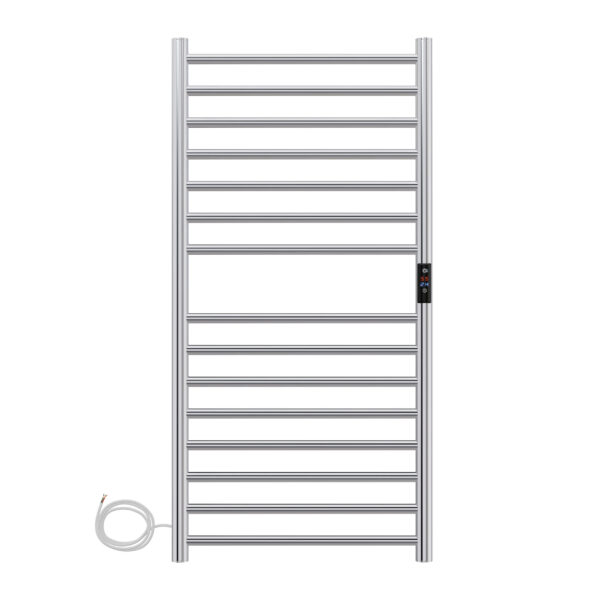

Premium SS Round Heated Towel Rail with Temperature & Timer Control

SS Round Heated Towel Rail Horizontal Single Bar – 3 Sizes
