
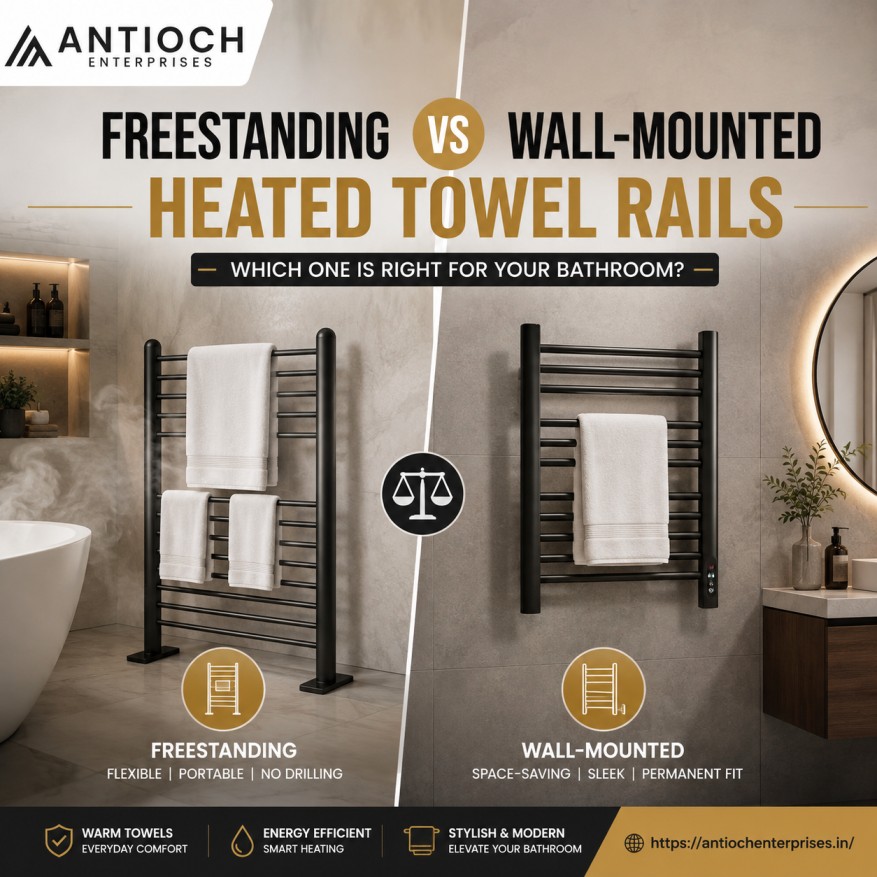
Freestanding vs Wall-Mounted Heated Towel Rails: Which Suits Your Bathroom?
Choosing between freestanding vs wall-mounted heated towel rails can feel confusing when you are renovating a bathroom or building a new home. Both options keep your towels warm and dry, but they work very differently depending on your space, budget, and style goals. Canadian winters make a warm towel feel like a small luxury every single day, so picking the right style matters more than most people realize. In this guide, we break down the pros, cons, and best use cases for each type so you can make a confident decision.
Why Heated Towel Rails Are Trending in Canada
More Canadian homeowners are searching for the best heated towel rail for bathroom upgrades this year, and it is easy to see why. With long, cold winters across provinces like Ontario, Alberta, and Quebec, a heated rail turns a chilly morning routine into something comfortable. These units also help reduce dampness and musty odours, which is a common issue in humid bathrooms. As energy-efficient models become more affordable, interest in both wall-mounted and freestanding designs has grown steadily.
The Rise of Smart Bathroom Upgrades
Smart home features are no longer limited to lighting and thermostats. Many buyers now look for towel rails with timers, digital displays, and low-energy heating elements. This shift ties directly into the growing demand for stylish, functional bathroom accessories that also save on electricity bills.
What Is a Wall-Mounted Heated Towel Rail?
A wall-mounted heated towel rail attaches directly to your bathroom wall, similar to a traditional towel bar. It uses either electric wiring or a plug-in cord, depending on the model you choose. This style is extremely popular because it saves floor space and gives a clean, built-in look.
Benefits of Wall-Mounted Models
Wall-mounted units are ideal for smaller bathrooms where every square foot counts. They sit flush or close to the wall, so they never get in the way of movement. Many Canadian homeowners also like that these rails can double as a stylish design feature, especially in matte black, brushed nickel, or chrome finishes.
Drawbacks to Consider
Installation usually requires drilling into the wall and, in some cases, professional electrical work. This makes wall-mounted rails less flexible once installed, since moving them later means patching holes and rewiring. Renters or those in temporary housing may find this option less practical.
What Is a Freestanding Heated Towel Rail?
A freestanding heated towel rail stands on its own legs and simply plugs into a nearby outlet. There is no drilling, no wall damage, and no need for an electrician in most cases. This makes it one of the easiest heated towel solutions to set up in any home.
Benefits of Freestanding Models
The biggest advantage is flexibility. You can move a freestanding rail from the bathroom to a bedroom, laundry room, or even a cottage without any extra work. This is especially appealing for renters, condo owners, or anyone who likes to rearrange their space seasonally.
Drawbacks to Consider
Freestanding units take up floor space, which can be a challenge in smaller Canadian bathrooms or condos with tight layouts. They may also feel less “built-in” or seamless compared to a wall-mounted design, depending on your aesthetic preference.
Freestanding vs Wall-Mounted Heated Towel Rails: Key Differences
When comparing freestanding vs wall-mounted heated towel rails, the decision usually comes down to three factors: space, installation effort, and long-term flexibility. Wall-mounted rails suit permanent homeowners who want a sleek, space-saving fixture. Freestanding rails suit renters, frequent movers, or anyone who wants a no-drill, plug-and-go solution.
Space and Layout
If your bathroom is compact, a wall-mounted rail keeps the floor clear and avoids clutter. Larger bathrooms or ensuites often have room to spare, making a freestanding rail a practical and attractive choice without sacrificing comfort.
Installation and Maintenance
Wall-mounted rails typically involve a one-time setup that may need professional help. Freestanding rails, on the other hand, require almost no setup and can be maintained or cleaned just like any other furniture piece in the room.
Style and Long-Term Value
Both styles come in a range of finishes, from classic chrome to modern matte black, so style is rarely the deciding factor. Long-term value depends more on how long you plan to stay in your home and whether you want a permanent fixture or a portable one.
Which One Is Right for Your Bathroom?
Think about how long you plan to live in your current space. If you own your home and want a polished, integrated look, a wall-mounted rail is usually the better long-term investment. If you rent, move frequently, or simply want flexibility, a freestanding model gives you the same warmth and comfort without any commitment.
Quick Comparison Checklist
- Small bathroom or condo → wall-mounted rail saves space
- Renting or planning to move → freestanding rail offers flexibility
- Want a built-in, custom look → wall-mounted rail wins
- Want a no-drill, plug-in setup → freestanding rail is easier
How to Choose Based on Your Bathroom Layout
Measure your available wall and floor space before deciding. A narrow bathroom with limited wall area may only fit a slim wall-mounted bar, while a spacious layout can easily accommodate a freestanding ladder-style rail. Always leave enough clearance around the unit for safe towel access and airflow.
Energy Efficiency Matters Too
Look for models with adjustable timers or thermostats, since these features help control electricity use throughout the year. Many newer designs, whether wall-mounted or freestanding, now include energy-saving technology that keeps running costs low even with daily use.
Pricing Guide — What to Expect in 2026
| Type | Size | Price Range |
| Vertical Single Bar (Round) | 800mm–1200mm | ₹2,599 – ₹3,799 |
| Vertical Single Bar (Square) | 800mm–1200mm | ₹2,799 – ₹3,999 |
| Horizontal Single Bar (Round) | 450mm–850mm | ₹1,099 – ₹1,699 |
| Horizontal Single Bar (Square) | 450mm–850mm | ₹1,599 – ₹2,299 |
| Miter Joint Ladder Rail | 600×400mm | ₹6,100 – ₹8,600 |
| Miter Joint Ladder Rail | 800×500mm | ₹7,300 – ₹12,100 |
| Rail with Shelf | 600×500mm | ₹8,600 – ₹14,200 |
| Rail with Shelf | 900×500mm | ₹9,400 – ₹15,600 |
Conclusion
Ultimately, the choice between freestanding vs wall-mounted heated towel rails depends on your bathroom size, your living situation, and how permanent you want the fixture to be. Wall-mounted rails suit homeowners looking for a sleek, space-saving, built-in solution, while freestanding rails offer flexibility for renters or anyone who prefers a plug-and-go setup. Both styles deliver the same warmth, comfort, and hygiene benefits that make Canadian bathrooms feel more inviting during colder months. If you are exploring high-quality, durable options in either style, Antioch Enterprises offers a curated range of heated towel rails designed to bring everyday luxury into any home.
Frequently Asked Questions
1. Are heated towel rails worth the extra cost?
Yes, most homeowners find them worth it for the added comfort, faster towel drying, and reduced mustiness, especially during colder months.
2. Do freestanding heated towel rails use a lot of electricity?
No, most modern models are designed to be energy-efficient and typically cost only a small amount to run daily, similar to a light bulb.
3. Can I install a wall-mounted heated towel rail myself?
Simple plug-in wall-mounted models can often be installed without an electrician, but hardwired versions usually require professional installation.
4. Which is better for small bathrooms, freestanding or wall-mounted?
Wall-mounted rails are generally better for small bathrooms since they do not take up any floor space.
5. Do heated towel rails work well in Canadian winters?
Yes, they are especially useful in Canadian winters for keeping towels warm, dry, and free from dampness during cold, humid months.
6. How long do heated towel rails typically last?
With proper care, high-quality stainless steel heated towel rails can last many years without rusting or losing efficiency.
7. Can a freestanding towel rail be moved to another room?
Yes, one of the main advantages of freestanding rails is that they can be easily relocated to any room with a power outlet.
Explore Related Articles:-
Heated Towel Rail Installation Cost in India 2026


SS Round Heated Towel Rail – 1200mm x 425mm with Temperature & Timer Control
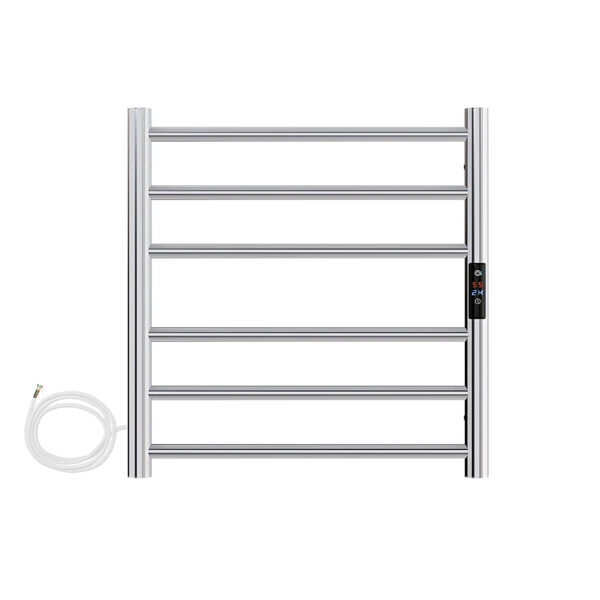
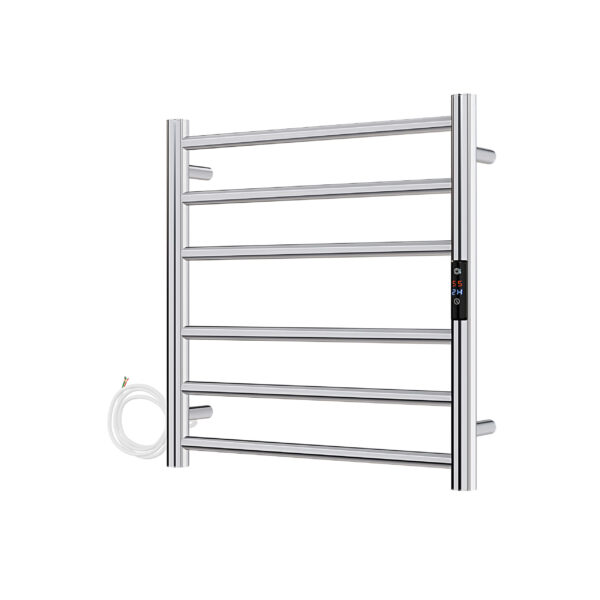
SS Round Heated Towel Rail – 620mm x 600mm with Temperature & Timer Control

SS Round Miter Joint Heated Towel Rail –800mm x 500mm

